
This is the seventh part of a series of articles on the relationship between jazz and comic books. Go to Part 1 , Part 2, Part 3, Part 4, Part 5 or Part 6.
The parallel between comics and jazz in their embrace of cultural plurality highlights the significance of artistic expression in challenging societal norms and fostering greater understanding and appreciation for diverse cultural perspectives. From the iconic artwork on jazz album covers to posters promoting live performances, the visual representations of the jazz culture created a compelling visual narrative that parallels the sonic experience.
The premise of this series of articles is that a large part of the aesthetics of jazz comes from the Graphic Arts, while the Ninth Art finds a source of inspiration in the genre. Both mediums have the capacity to empower and amplify voices that are often underrepresented, and both are privileged fields for observing gender issues, which is the main point of the present segment.
When it comes to comic books, the portrayal of gender roles and stereotypes has been a subject of debate. From the early days of the comic book industry, female characters were often relegated to stereotypical roles such as “damsels in distress” or sidekicks to their male counterparts.
Although in recent years there has been a noticeable shift towards creating more diverse and empowering female characters, challenging traditional gender norms within the genre, there is still a lot of room development in this area.
Similarly, in the realm of jazz, there has been a long history of male dominance, with female musicians often facing discrimination and gender-based barriers in pursuing their careers. Despite these challenges, there have been many influential female jazz musicians who have made a lasting impact on the genre, breaking through the traditional gender norms and paving the way for future generations of women in jazz.
While achievements in the field of women’s rights gain visibility outside the limits of representation (to use an expression from the French philosopher Michel Foucault), female protagonism still encounters a certain barrier in transposition into the language of comic books. Biographical graphic novels are a good example of how representation can both promote advances, but also hinder them.
When examining the portrayal of male and female characters in graphic novels, it becomes evident that these depictions often intertwine with and reflect the pervasive elements of the sexist social structure within which we exist. Particularly noteworthy is the prevalence of extremely eroticized bodies among the heroines in the superhero comics niche.
This trend not only perpetuates unrealistic and hypersexualized standards of beauty, but also perpetuates gender stereotypes and reinforces the objectification of female characters within the medium. These portrayals can serve to underscore the need for a more progressive and inclusive approach to character representation within graphic novels, one that embraces diversity, rejects traditional gender norms, and strives for more authentic and multidimensional characterizations.
It is also often observed that representations tend to focus more on personal scandals rather than on the professional achievements of these remarkable women. This imbalance can lead to a skewed perception of their contributions to the world of jazz and their impact on the broader cultural landscape. Furthermore, such stereotypes have detrimental effects on the visibility and appreciation of women in music in general and particularly in jazz, and their importance to the history of the genre, overlooking and or undervaluating it.
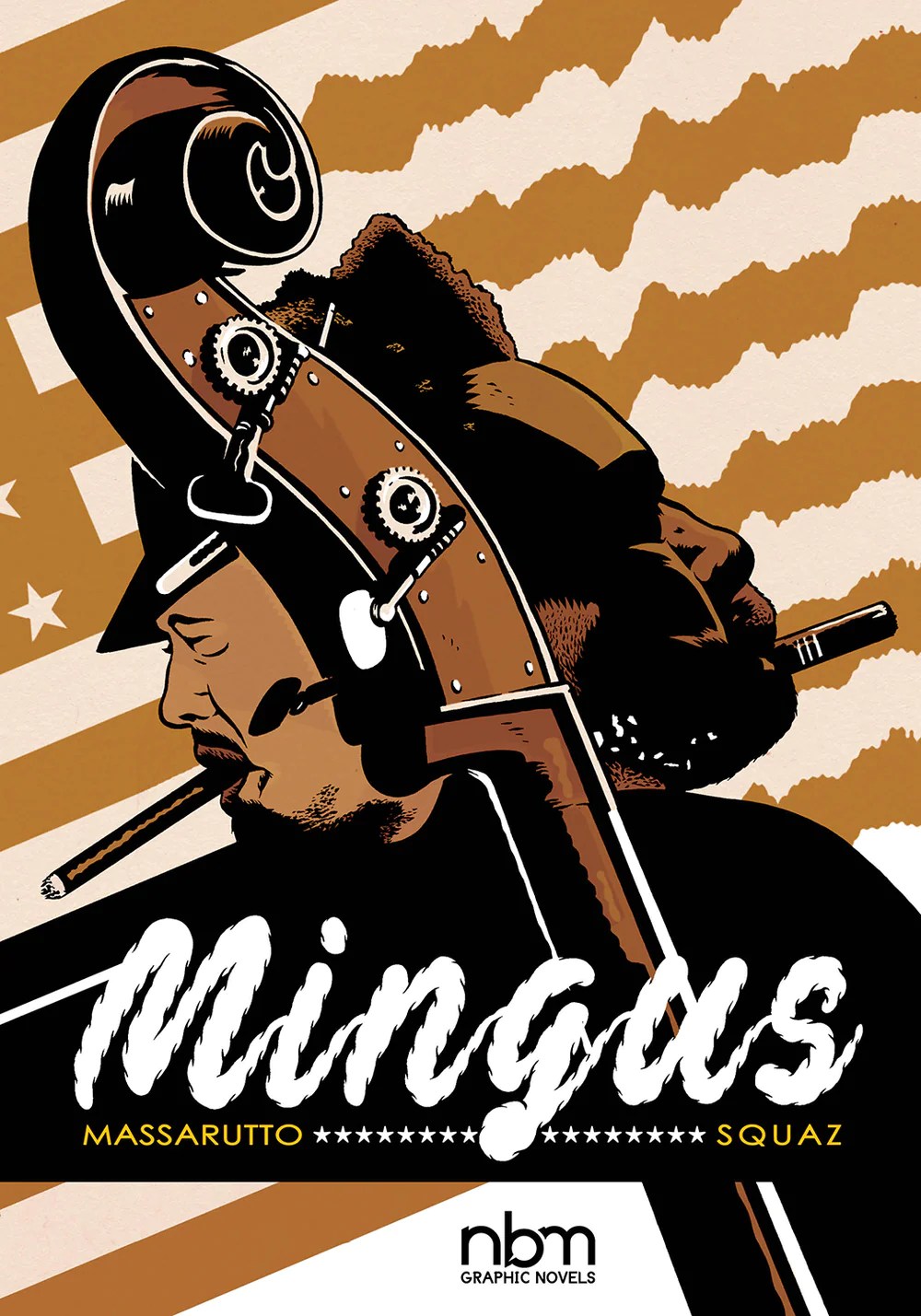
A good example of how the practice of victimization of the protagonist in graphic biographies of jazz icons constitutes a widespread and naturalized visual grammar is the comparison of the covers of the biographies of jazz legends Billie Holiday and Charles Mingus, both published by NBM – Graphic Novels.
The portrayal of the universe of Billie and Mingus, presents striking divergences in terms of the elements chosen to convey its essence. While certain aspects converge, such as the pervasive atmosphere infused with the smoke of cigarettes and cigars, the semiotic representations greatly differ in both covers.
The female figure is depicted in a state of desolation, completely devoid of any reference to her instrument, the voice, and reduced to a dramatic figure. In stark contrast, Mingus is rendered majestically, symbolizing power and authority in his musical prowess (and the reference to his instrument is there, too)

These observations are intended to remind us that comic books, like jazz, provide a lens through which we can examine and question the attitudes of society towards gender issues and, therefore, serve as important platforms for advocating gender equality and challenge preconceived notions about gender roles.
Be seeing you!
G.F.

 GEISA FERNANDES
0 Comments